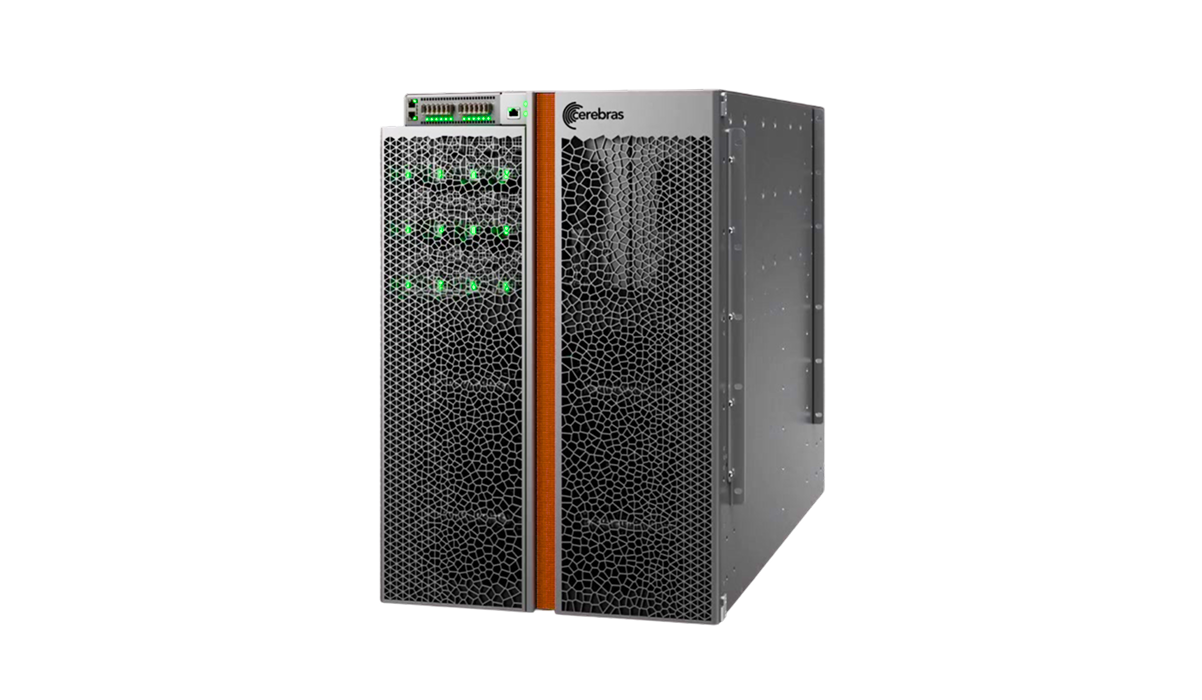
Cerebras’ September 28, 2026 agreement with Gimlet Labs put the operating model in view: the chip supplier would deliver systems, while Gimlet would maintain and operate them. The roughly 100-megawatt scale reported by Reuters is a hardware-and-service relationship with divided responsibilities, not simply evidence that one processor wins every inference workload. Reuters: Cerebras and Gimlet, September 2026
Measure the workload
Our analysis begins with the customer workload. A fast result on one model is evidence about that configuration. It does not establish the best economics for a different model, a different response-length distribution or a service that must remain available during maintenance. Buyers purchase usable output under operating constraints.
For an investor, the commercial system includes software compatibility, installation, operations and support. A processor can offer an architectural advantage while requiring substantial engineering to fit customer workflows. That work may be worth funding, but its cost should be visible rather than hidden behind a comparison of peak arithmetic performance.
Finance adoption
Autonomous applications sharpen the issue because they often call models repeatedly. A planning agent may need several turns before completing a task; a robotics developer may run many experiments before a release. Lower latency can improve the experience, yet its value depends on whether it changes successful completion or productive engineering time.
The sensible diligence sequence is to reproduce relevant performance, estimate the full operating cost and test the migration path. Capital that helps a supplier deliver repeatable, supported service can be more commercially decisive than capital that produces one impressive demonstration. A durable advantage must survive deployment at customer scale, with realistic reliability demands and a support bill included in the calculation.
The first customer decision is what to own
A buyer can acquire equipment, reserve a managed service or combine the two. Each arrangement puts different obligations on the supplier and customer. Gimlet’s reported responsibility for operations means that the value proposition extends beyond acquiring fast hardware. It requires a team and software environment capable of converting the machines into dependable capacity for end users.
For the manufacturer, this can change the pattern of capital needs. Selling systems may recover cash differently from building a facility and selling usage over time. It can also change which company carries utilization risk. Without the full commercial contract, an outside reader cannot calculate the difference precisely, but identifying the operating model is the necessary first step.
Public reporting creates a new baseline
Cerebras’ August 2026 results release described its expanding relationships and financing resources, including an up-to-$850-million revolving facility. The facility is a financing arrangement, not evidence that every dollar had been drawn or that corresponding data centers were complete. A public company’s disclosures provide a richer baseline, but they still need to be read by category. Cerebras second-quarter results, August 2026
The investor’s task is to connect spending to productive assets. Inventory, installed equipment and operating capacity occupy different places in that sequence. A company can have strong demand and still face difficult timing if it pays for hardware long before collecting the associated revenue. The financing story therefore remains important even after a technically differentiated product reaches customers.
Porting costs are part of the product
A customer changing infrastructure must preserve the behavior of its application. That can involve model support, software integration and tests that compare quality as well as speed. A provider that helps customers complete this work has a more practical offering than one that merely publishes favorable throughput figures. The implementation effort affects the real cost of switching.
For an agent application, that effort may include preserving tool interfaces, handling long inputs and producing consistent outputs under different demand levels. The MLPerf Inference v5.0 release organizes results around defined workloads and testing scenarios. A benchmark cannot price all of those requirements. A trial should therefore use a representative workload, with the customer’s own acceptance criteria and a record of the engineering work needed to reach them.
Availability determines whether speed is usable
A fast service that becomes unpredictable under load may force customers to keep fallback capacity elsewhere. That can reduce the savings or revenue gains they expected from moving. The relevant comparison is not the best observed response time but the distribution of performance during the hours and conditions in which the customer needs the service.
Support matters for the same reason. When a system behaves unexpectedly, the customer needs a clear division of responsibility between model developer, hardware provider and operator. The Gimlet relationship illustrates why that division deserves attention: supplying the machine and running the commercial service are connected tasks, but they are not necessarily performed by the same organization.
The proof is repeatable paid work
The next evidence should connect equipment deliveries with customer use, service performance and cash generation. A large order is meaningful, yet it does not by itself show how quickly assets become productive or what margin they earn. A responsible account can recognize commercial momentum without turning a single contract into a universal verdict on the architecture.
The broader implication for autonomy is that infrastructure competition will be decided inside workflows. Customers need intelligence that arrives on time, integrates with their tools and remains economical as usage grows. The strongest chip investment thesis is therefore a system thesis: distinctive hardware, usable software and an operating model that can repeatedly deliver the claimed benefit to paying users.
Sources & evidence
This archive preserves its original editorial date. Sources describe the events and announcements discussed; they do not establish today’s status.